
'Folklore on the Move' The Folklore Society’s Annual Conference 2026
Date 5 June 2026 - 10 June 2026
Location Online and King's College, Aberdeen AB24 3SW United Kingdom
** JOIN US FOR OUR ONLINE DAY, WEDNESDAY 10 JUNE 2026, 09:30-17:30 BST
TICKETS £40 FROM EVENTBRITE: CLICK HERE TO BOOK **
Folklore on the Move
The Folklore Society’s Annual Conference 2026, in collaboration with the Elphinstone Institute, University of Aberdeen
In Person: Friday 5 June, from 14:00, to Sunday 7 June, 13:00, at King's College, King's Quad, High Street, Aberdeen AB24 3SW
And Online: Wednesday 10th June 2026.
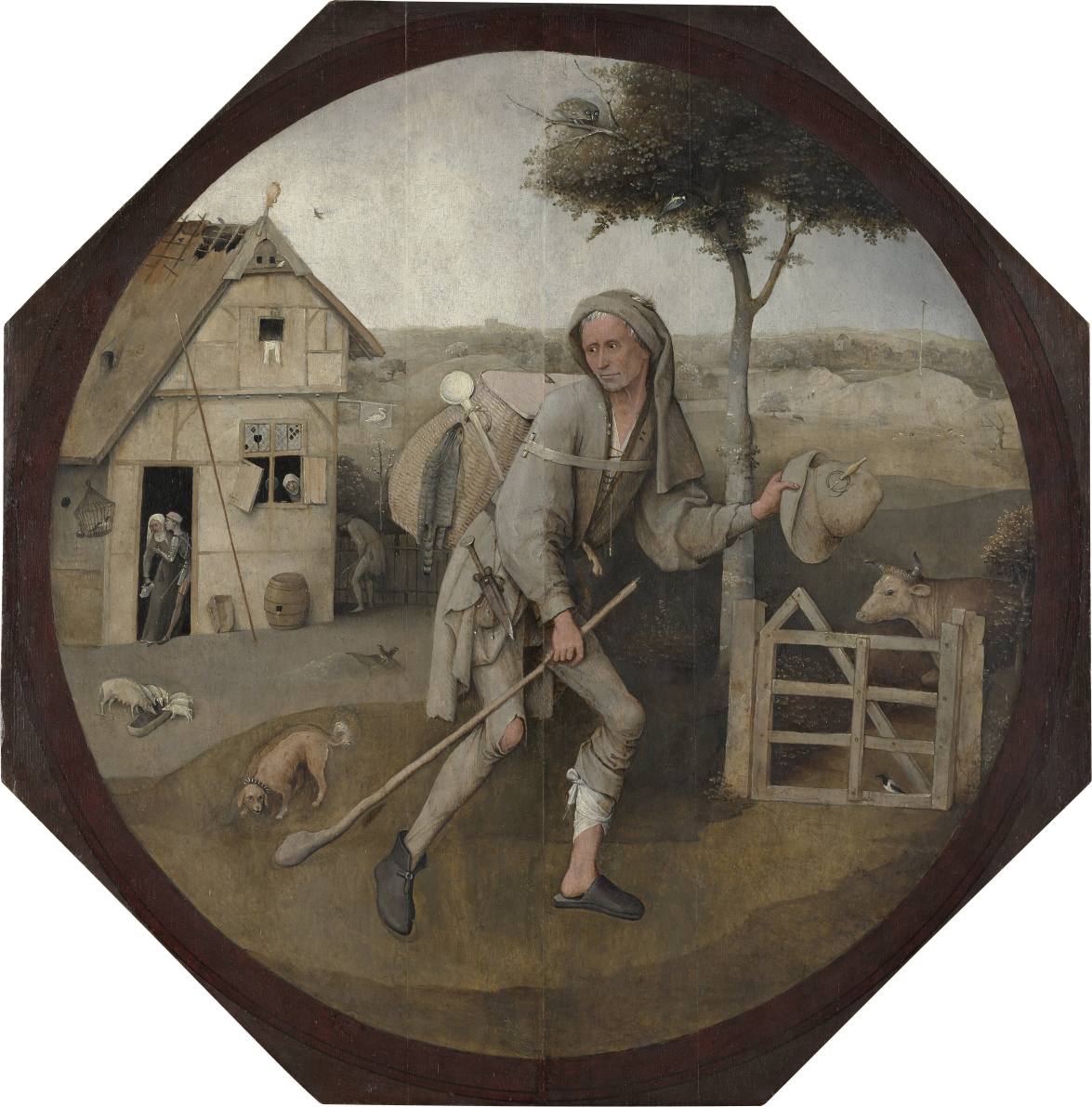
The vitality of folklore depends on the movement of people and/or ideas. Some forms of folklore can be defined directly through their relations to movement, whether practically – e.g. certain cultural forms of Roma and Traveller communities, migrants, showpeople, sailors, etc. – or performed, e.g. tales of years-long quests, ballads of departure, or myths whose characters move between supernatural and physical realms. We can also consider the movement of individual items: a lullaby moves intimately from one generation to another; an online meme is sent to thousands via social media; a tag is spray-painted across a city; dance steps are called from the stage as partners and groups move around the floor.
The movement of disciplinary ideas and methodologies and how these have shaped Folklore and adjacent fields is worthy of contemplation, as well. More specifically, the connection between folklore and movement has interested folklorists going back at least to Julius Krohn’s historic-geographic method, which attempted to track the movement of folklore across place and time. Later, Reidar Christiansen pointed to the migratory nature of legends, while Carl von Sydow reminded us of the cultural changes that folklore undergoes as it moves, and Linda Dégh considered the ‘conduits’ of interest that are necessary for the sharing of folklore.
At a time when folklore and related symbols have been co-opted by some to delineate stringent identity boundaries, the Elphinstone Institute and The Folklore Society are pleased to work together to highlight the movement of folklore and the interconnectedness of people. This is not to imply that all folklore is benevolent, nor to neglect the movement inherent to the discipline’s problematic colonial histories. We hope to encourage nuanced discussions of folklore and movement through a variety of lenses and from a wide range of participants.
REGISTRATION NOW OPEN! Click here to download the booking form
Deadline for in-person registration: 15 May 2026
Conference fees:
In-Person: £150 GBP Standard Rate; £100 Folklore Society Member Rate; £80: Reduced Rate (Student/Unwaged/Low Earner); £30: University of Aberdeen Staff/Students.
Day Rates are also available (see booking form).
In-person fees include refreshments between sessions, and lunch on Saturday 6th, as well as free access to the online day of the conference on 10 June.
Online participants: £40.00 Flat Rate
Online participants will be able to watch a live stream of the conference
Accommodation is not included in the conference fee
PROGRAMME: Click here to download the Programme and Abstracts
Friday 5th June
13:00–14:00 Registration; tea/coffee
14:00–14:15 Introduction & Welcome (plenary)
14:15–15:45 Session 1 (plenary)
COMMUNITY IN MOVEMENT
Denielle HILL: ‘Marching for the Dead and the Living’: Transgender Memorialization, Protest, and Pride
Daisy HEATH: ‘Beating the Bounds’: The Moving Soundscapes of Southeast London’s Morris Dancing Traditions of Contemporary Folklore
Jessica LLOYD MAY: The Role of ‘Outsiders’ in the Observance of a Community Custom: The Case of the Randwick Wap
15:45–16:15 break for tea/coffee
16:15–17:15 Session 2 (parallel sessions 2A and 2B)
(2A) LEGENDARY FIGURES
Angelika H. RÜDIGER: Wandering on the Mountain of Cloud: Gwyn ap Nudd
Matthew RYAN-EAST: How the Pied Piper Changed his Tune: Exploring the Encounters of a Travelling Folktale Figure
(2B) NARRATIVE AND PERFORMATIVE TRANSMISSION
Anastasiya ASTAPOVA: Viral, Fleeting, Repeated: How Conspiracy Talk Travels among Teenagers
Patrick RYAN: Football Folktales: Elements of Folktale Morphology in the Memories and Personal Stories of Football Players and Coaches
18:00–19:00 drinks reception
Saturday 6th June
09:30–11:00 Session 3 (parallel sessions 3A and 3B)
(3A) RITUALS OF DEATH
Stuart DUNN: Corpse Paths and Sites: Rethinking Approaches to Mobility in Landscapes
Helen FRISBY: Walking With The Dead: English Funeral Processions, Past and Present
Eira H. BETTHELL: Musical Psychopomps: Folklore in Motion through Sound
(3B) REINTERPRETING THE ARCHIVES
Mimesis Heidi DAHLSVEEN: Archiving the Ephemeral: Movement Between Memory, Tradition, and the Body
Adina HULUBAŞ: Moving to the Digital Realm: Two Folklore Archives on a Quest for the Safeguarding of Childbirth Practices
Chris GREENCORN: ‘Like most of their race they are musical’: Race, Migration and Authenticity in Helen Creighton’s Collection of Nova Scotian Folk Culture
11:00–11:30 break for tea/coffee
11:30–13:00 Session 4 (parallel sessions 4A and 4B
(4A) MAKERS AND PLAYERS
Jaycee STREETER: The Miscellany as Method: Transmitting Folklore in MS Ashmole 61
Caleb LEVY: Moving to New Media: Games as a Tool for the Preservation of Folklore
Phoebe MILLERWHITE: Rewriting the Self-Taught Artist: Market Mediation, Representation, and the Politics of Narrative Control
(4B) MATERIAL TRAFFIC
Anastasia A. FLORAKI: From Europe to the Aegean: The Journey and Localization of Filé Lace in Tinos
Iryna STAVYNSKA: Ukrainian Culture on the Move: The Journey of Folk Dress from Village Tradition to Museum Artifact to Wartime Instagram Trend
Adam WEINER: Going through the Motions: Jelly Jars, Enochian Giants, Solomonic Circles and Kabbalistic Vessels in Nabokov's Signs and Symbols [late addition to Programme]
13:00–14:00 lunch
14:00–15:30 Session 5 (parallel sessions 5A and 5B)
(5A) MAGIC AND MURDER
Brenna Shay QUINTON: From Cunning Folk to WitchTok: The Benefits and Risks Associated with the Diffusion of Vernacular Religious Belief and Practice on Social Media
Clara DIES VALLS: From Harpy to Sorcery: Geographical and Chronological Evolution of the Iberian Witch
Catherine TOSENBERGER: Via Venefica: Poisonous Women in Roman Tourism
(5B) MOVEMENT OF TALES AND TALES OF MOVEMENT
Martha STEWART: A Lot of Flannel about the Flannans: Folklore, Legend and Myth in the Lighthouse Service
Rory WATERMAN: The Metheringham Lass: Tracing the Origins of a Phantom Hitchhiker
Anastasiia ZHERDIEVA: Research on the Adoption of a Purely European Motif into Crimean Tatar Folklore
15:30–16:00 break
16:00–17.30 Session 6 (parallel sessions 6A and 6B)
(6A) CHILDREN AND THEIR ELDERS
Julia BISHOP: ‘We Are but Little Children That Beg from Door to Door’: The Perambulatory Performances of Children and Young People as ‘Child-to-Adult’ Folklore
Mary CANE: The ‘Baby Boomer’ Cohort of Transnational Grandmothers from the Anglo World
Gina ZIMBARDI: Beyond Entertainment: The Public Health Significance of Children’s Folklore
(6B) MESSAGES THROUGH SPACE AND TIME
Ida TOLGENSBAKK and Ceri HOULBROOK: ‘Santa Claus, c/o Oslo’: Posting wishes from Britain to Norway
Meaghan COLLINS: The Sailors’ Valentine: Moving Tradition Across Oceans, Time, and Trade Routes
Jeremy HARTE: 'Speak, Lord, Thy Servant Heareth': Heavenly Letters
Sunday 7th June
09:30–11:00 Session 7 (parallel sessions 7A and 7B)
(7A) MIGRATION, MOVEMENT, MEMORY
Kylie AQUILINA: Ġaħan in Motion: Migration, Memory, and Mediterranean Identity
Florina DOBRE BRAT: The Midsummer Folk Traditions of the Romanian Community in Scotland
Molly BAMBROUGH: Transporting Worlds: Migrant Folklore as Ontologies in Motion
(7B) FOLK MUSIC: SHIFTS IN PERCEPTION & PRACTICE
Paul COWDELL: Towards an Autoethnomusicology? Intellectual and Physical Movement, the Idea of Folk Clubs and Understandings of ‘Tradition’
David FAYLE: An Analysis of Potential Changes in Folk-Song Lyrics Between Singers
Abigail GRAHAM: The Addition of Sugar to a Classic ‘British’ Cuppa—Moving towards Diverse Folklore in the UK
11:00–11:30 break
11:30–13:00 Session 8 (parallel sessions 8A and 8B)
(8A) REFRAMING THE SUPERNATURAL
Melissa LaROSE: Movement of Fairy Lore and Rituals through Generations and Migration
Josiah EAMES : ‘Rent a Ghost’: The Impact of Imported Folklore on the Modern English Christmas Tradition
Gemma Róisín JOLLIFFE: Towards an Éireannach Aeolian-Mythology: The Wind(scape) as Performing the Seanchaí, Storyteller
(8B) LYRIC, DANCE, REBELLION
Elysia COTTON: Hells Bells: Constructions of Identity in a Northwest Morris Side and an Outlaw Motorcycle Club
Noelia RUFETE-GIL: Flamenco on the Move: Embodied Memory, Displacement, and Reconnection
Julie ZIELSTRA: A Post-Punk Irish Diasporic Bardic Tradition? The Case of Irish Songwriter Cathal Coughlan’s Thatcher-era Ballad Berties’s Brochures
13:00: Close of 5-7 June presentations
14:00-16:00: Walking tour of Old Aberdeen with Dr Fiona-Jane Brown: the tour is limited to 30 people and is £10 per person (cash or transfer): if you’d like to book to join the tour, please email thefolkloresociety@gmail.com and we’ll forward your email to Dr Brown
Wednesday 10 June (Online) PROGRAMME
9:50 Introduction
10:00–11:30 Session 9 (parallel sessions 9A and 9B)
(9A) REFUGE, EXILE, AND SURVIVAL
Ilaha ASGAROVA: Toponyms in Karabakh Legends and Narratives in the Context of Movement through Forced Displacement in the 1990s
Ulkar YUSIFOVA: The Transformation of Azerbaijani Refugee Folklore under the Influence of Urbanization
Mykola NEBORACHKO: The Migration of Silence and the Inherited Myths of Loyalty: Family Memory and Bureaucratic Folklore in Post-Soviet Space
(9B) PROVERBIAL AND MATERIAL TRANSMISSION
Adetola ABATAN: Proverbs of the Cloth—An Exploration of Yoruba Communal Wisdom in Traditional Textiles
Gaurav SEHRAWAT: Songs that Wander, Proverbs that Settle: Tracing the Life-Course of Haryanavi Oral Culture
Nidhi MATHUR: Moving Traditions: Mobility, Migration, and the Transforming Pathways of Indian Folklore
11:30–12:00 break
12:00–13:00: Session 10 (parallel sessions 10A and 10B)
(10A) TASTE; APPETITE; CONSUMPTION
Teresa MATEUS: Storying Mama Coca: A Transmission and Transmutation in a Leaf’s Journey from the Andes to the Diaspora
Sharon CARR-WU: A Takeaway Childhood—Memoir-Narratives of Growing up in a Chinese Takeaway
(10B) ORAL AND TEXTUAL TRANSMISSION
Anna BERESIN: Moving Material: Following the Paths of Object Play
Mercedes CERÓN: The ‘course of folktale wandering’ in the Collections of Francis Douce (1757–1834)
13:00–13:30 break
13:30–15:00: Session 11 (parallel sessions 11A and 11B)
(11A) STAGE AND SCREEN
Sreenandana C S: From Ballads to Screen: Evolving Narratives and the Recasting of Heroes and Heroines in Vadakkan Pattukal
Subhash KAMALKAR: From Shrine to Stage to Reel: The Moving Life of the Ghumot—A Percussive Heritage
Ekta CHAUHAN and Vandana SHARMA: Bhagats, Bhands and Bahurupiyas: Tracing the Convergent Paradigms of Folk Theatrical Forms of India
(11B) RITUAL AND MOURNING
Francesca DE NARDIS: Folklore on the Move: Intergenerational Transmission and Revitalisation of the Resian Pust
Krzysztof ULANOWSKI: Carrying Belief: The Movement of Bodies, Images, and Ideas in Kashubian Marian Folklore
Adam GRYDEHØJ: Shifting Fortunes: Mobility, Economy, and Tradition in the Lives of South China Village Temple Ritual Service Providers
15:00–15:30 break
15:30–17:00 Session 12 (parallel sessions 12A and 12B and Final plenary)
(12A) IMAGES OF WOMEN
Rosie BARRETT: Reimagining ‘Sarkless Kitty’ and the Women of the North York Moors: Creative Retelling and Ethical Responsibility in Folklore and Public History
Meltem BUZKIRAN SAP: The Female Hero on the Move: A Comparative Perspective from Turkic Epic Tradition
(12B) DANCE AND MUSIC
Trishnamoni PATGIRI and Baburam SAIKIA: Lives Moving in Dance: Tradition, Beliefs and Myths of the Vaishnava Devotees
Athanasios BARMPALEXIS: Folklore in Motion: Reworking Historical Narratives in Contemporary Music Subcultures
16:30–17:00 Final plenary: FOLKLORE ON THE MOVE
Louise PLATT and Sophie PARKES-NIELD: Procession as Place, Form, and Plot: Collective Movement within Everyday Life
17:00–17:30: Concluding remarks and discussion
#/media/File:Jheronimus_Bosch_-_The_Pedlar_-_Google_Art_Project.jpg)